

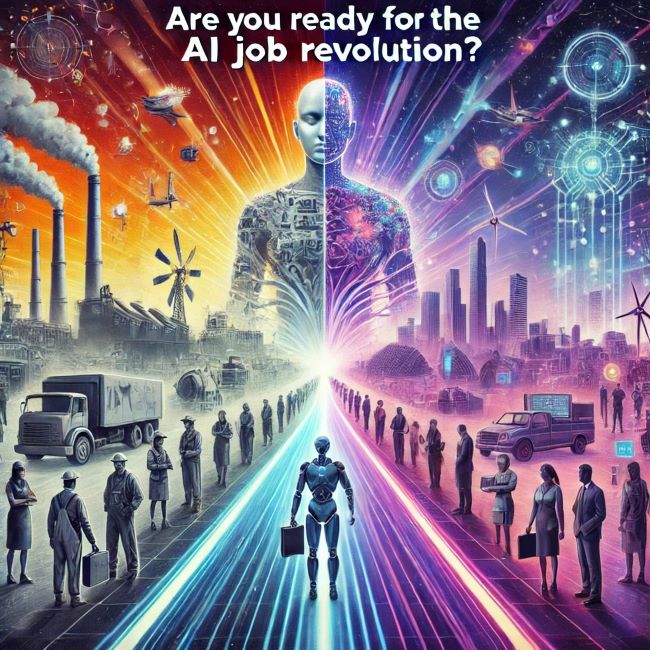
“By 2030, AI could displace 92 million jobs globally—but it might also create 170 million new ones. Are you ready for the AI job revolution?”
The Transformative Power of AI: A Double-Edged Sword
AI is undeniably a game-changer, poised to inject trillions of dollars into the economy and create entirely new business landscapes. Businesses sense this seismic shift, with a staggering 86% of executives anticipating major changes due to AI and automation by 2030.
Yet, such dramatic transformations bring real anxieties. Organizations face potential reputational damage, reduced brand loyalty, and shareholder unrest if AI deployment falters. Robust corporate governance frameworks become indispensable—critical for managing not just economic potential, but also ethical, legal, and operational risks.
Insights into these strategic transformations can be explored further in “The AI Revolution and Its Implications for Wealth Creation” and “Navigating the AI Revolution: Strategies for Wealth and Career Resilience”.
Jobs at Stake: Automation’s Direct Impact
Jobs involving repetitive tasks and minimal human judgment are most vulnerable. Roles such as medical transcriptionists, postal sorting staff, CNC machine operators in manufacturing, automated warehouse pickers, and court reporters are prime candidates for AI-driven automation.
Here’s how global job displacement and creation look by 2030:
| Source | New Jobs Created (Projected) | Jobs Displaced (Projected) | Net Job Change (Projected) |
|---|---|---|---|
| Global Estimates | 170 million | 92 million | +78 million |
For a detailed look at AI’s impact on the job market, see this analysis by the University of San Diego.
Emerging Opportunities: The Jobs of Tomorrow
Where will these new jobs emerge? The fastest-growing job categories by 2030 include:
| Category | Examples of Roles | Driver |
|---|---|---|
| Technology-Related | Big Data Specialists, AI/ML Specialists, FinTech Engineers, Software Developers, Cybersecurity Specialists | Adoption of AI, Robotics, Data Technologies |
| Green Transition | Autonomous/Electric Vehicle Specialists, Environmental Engineers, Renewable Energy Engineers | Efforts to Reduce Carbon Emissions |
| Technology Infrastructure | Data Warehousing Specialists, IoT Specialists, DevOps Engineers, UI/UX Designers | Increased Digital Connectivity |
Additionally, the largest absolute job increases will likely occur in these areas:
| Category | Examples of Roles | Reason |
|---|---|---|
| Frontline/Traditional | Farmworkers, Labourers, Delivery Drivers, Shop Salespersons, Food Processing Workers | Ongoing demand for essential services |
| Technology Development | Software and Applications Developers | Continued digitalization |
| Care Economy | Nursing Professionals, Social Work/Counselling Professionals, Personal Care Aides | Aging populations, increased healthcare needs |
Explore more insights about career resilience in an AI-driven future through “Why Certain Professions Will Survive the AI Takeover”.
Future-Proof Skills: How to Thrive
Almost 39% of today’s core skills could become obsolete within five years. To thrive, the following skills are indispensable:
| Category | Specific Skills |
|---|---|
| Thinking | Analytical thinking, Creative thinking, Systems thinking |
| Adaptability | Resilience, flexibility, and agility |
| Influence | Leadership and social influence |
| Technology | AI and big data, Networks and cybersecurity, Technological literacy |
| Learning & Growth | Curiosity and lifelong learning |
| Ethics & Impact | Environmental stewardship |
Navigating the Change: Individual and Organizational Strategies
Individuals can proactively:
- Embrace new technologies and acquire new digital tools.
- Commit to ongoing education and skill-building.
- Sharpen essential human skills: empathy, communication, critical thinking.
- Diversify professional capabilities to enhance job resilience.
- Build strong, supportive professional networks.
- Stay informed about industry trends and emerging technologies.
Organizations must responsibly:
- Prioritize workforce reskilling and upskilling initiatives.
- Recruit employees skilled in future-ready competencies.
- Transition workers from declining roles to expanding ones, ensuring job continuity.
- Establish transparent AI governance frameworks, with clear ethical guidelines and risk management at the board level.
- Educate employees on AI ethics, benefits, and potential pitfalls.
A comprehensive report by the University of Michigan provides detailed strategies for organizational preparedness: “Microsoft ExecMAP 2023-2024 Final Report”.
The Human Element: Our Enduring Strength
Ultimately, AI’s transformative impact highlights the unmatched value of human skills. Creativity, empathy, nuanced judgment, and leadership remain uniquely human domains. Rather than viewing AI as competition, we should envision collaboration: humans and AI, together.
By nurturing these inherently human strengths and fostering continuous adaptation, we can not only survive the AI job juggernaut but thrive, creating a future rich with opportunity for all.
The AI revolution is here—let’s ensure we’re at the helm, shaping it together with humanity at its core.
