

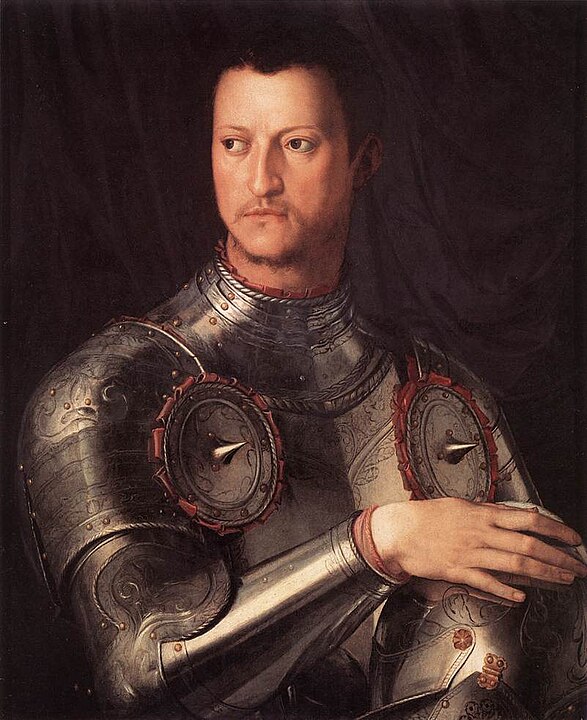
When Cosimo de’ Medici was expelled from Florence in 1433, the family’s banking operations did not pause. They continued — in Rome, Venice, London, Bruges, Geneva — because the system had been built to run without any single centre. That was not an accident. It was the design.
The Medici were exiled more than once. Their wealth was not. What made the difference was less any single strategy than the architecture of the whole: a distributed network of operations, relationships, and reputational capital that no jurisdiction could fully seize. Understanding how that system worked offers something more useful than a list of historical tactics — it reveals what jurisdictional independence looks like at the level of a dynasty.
The Network as the Asset
The Medici bank was not a single institution. By the mid-fifteenth century it operated as a network of semi-autonomous branches, each with its own accounts, management, and client relationships. Florence was the centre of gravity, but not the point of failure. Historian Raymond de Roover, in The Rise and Decline of the Medici Bank, 1397–1494, identified this decentralisation as the structural feature that distinguished the Medici from most of their contemporaries.
During Cosimo’s 1433 exile, operations continued from Venice. The Roman branch handled Vatican finances. The London and Bruges branches managed transactions for English and Flemish merchants. No single political disruption could reach all of them simultaneously. Revenue kept flowing.
Alongside the banking network, the family held extensive real estate in the Florentine countryside. Richard A. Goldthwaite, in The Economy of Renaissance Florence, notes that these holdings provided a stable income base far harder to freeze than financial instruments. Land also maintained ties to rural networks of loyalty — useful when urban alliances were volatile. For more on how tangible assets have historically anchored wealth through instability, see The Evolution of Wealth Storage and Status Symbols.
The structural lesson is not about geography. It’s about single points of failure. A family whose income, operations, and influence are concentrated in one jurisdiction is exposed in ways that a distributed system is not. The Medici had built, over generations, a structure where displacement from any one node didn’t collapse the whole. For a broader look at how this kind of thinking has shaped wealth preservation across history, see Historical Strategies for Wealth Preservation: Insights from Elite Families.
Trust as a Balance Sheet Item
Of all the Medici’s assets, the hardest to quantify and the hardest to take was their reputation.
The Medici name, by the early fifteenth century, signalled reliability. Merchants across Europe knew that a Medici letter of credit would be honoured. The Vatican’s relationship with the family extended across decades and multiple pontificates. This wasn’t sentiment — it was a credit mechanism. Reputation was the collateral that kept transactions moving when political conditions were uncertain.
De Roover notes that the Medici name became a kind of operational guarantee: counterparties continued doing business with the family because the track record was long enough to outweigh short-term political noise. Exile was political. The creditworthiness of the institution had been built across time and couldn’t be exiled alongside Cosimo.
This is the part of dynastic wealth that’s most often overlooked. Capital can be moved, diversified, or concealed. Trust architecture — the accumulated record of consistent behaviour across transactions, jurisdictions, and decades — takes longer to build and survives disruption differently. It doesn’t appear on a balance sheet, but it functions like one. For related thinking on what underlies durable wealth systems, see The Foundations of Wealth.
Institutional Positioning and Dynastic Reach
The Medici’s relationship with the Catholic Church was not merely devotional. It was structural. The family managed Vatican finances for extended periods, a position that made them indispensable to an institution with pan-European reach. When Giovanni de’ Medici became Pope Leo X and Giulio de’ Medici became Pope Clement VII, that relationship moved from contractual to constitutional.
J.R. Hale, writing on the Medici and the papacy, emphasises the practical dimension: access to Vatican revenue streams provided income that was both geographically distributed and institutionally protected. No single city-state could sever it. The Church was, in effect, the most stable counterparty available in fifteenth-century Europe.
Strategic marriages extended this logic outward. Catherine de’ Medici’s union with King Henry II of France, and Marie de’ Medici’s with King Henry IV, were not primarily romantic arrangements. As historians Natalie Tomas and Marcello Fantoni have both noted, they were mechanisms for embedding the family in jurisdictions with independent political weight. Each marriage added a node to the network. Each royal connection created a new layer of protection — and a new avenue for capital movement. For more on how dynastic families have used these structures across generations, see Multi-Generational Wealth Strategies: How It’s Done Right and The Keys to Successfully Transferring Wealth Across Generations.
What institutional access and dynastic marriage share is a preference for embedding over hoarding. The Medici didn’t try to concentrate wealth behind walls. They distributed it across relationships and institutions that were themselves hard to dislodge. That’s a different model of preservation — and a more durable one. The tensions between concentrated and distributed approaches to wealth have a very long history, explored further in The Risks and Rewards of Diversified vs. Concentrated Portfolios.
Return as Active Strategy
The Medici did not treat exile as a condition to endure. They treated it as a phase to manage.
In 1512, with papal backing, they returned to Florence. In 1530, supported by external imperial pressure, they returned again — this time establishing a permanent duchy. Each return was negotiated, resourced, and timed. The external relationships built during years of operation across multiple jurisdictions became the instruments of re-entry.
The exile years were not gaps in the Medici story. They were the periods when the system’s design was tested most directly. The network built for commercial efficiency proved equally useful as a political infrastructure. That dual-use quality — systems that serve multiple purposes simultaneously — is one of the features that separated long-surviving dynasties from those that didn’t outlast a single generation. For a wider look at how elite families have navigated crises across history, see The Art of Escaping with Wealth and The Rise and Fall of Wealthy Families: Lessons from History.
The more interesting question may be what they built in the years before displacement — and whether the system would have held without those decades of deliberate construction.
How did the Medici maintain their banking operations during exile?
The Medici had built a network of semi-autonomous branches across Europe — in Rome, Venice, London, Bruges, and Geneva. Each operated with its own accounts and management. When Cosimo was exiled in 1433, the other branches continued functioning independently. No single political event could shut down the entire network simultaneously. Read more at Historical Strategies for Wealth Preservation: Insights from Elite Families.
What role did the Catholic Church play in Medici wealth preservation?
The Medici managed Vatican finances for extended periods and produced two popes — Leo X and Clement VII. This gave them income streams that were geographically distributed and institutionally protected, independent of any single city-state’s political conditions. Learn more at Multi-Generational Wealth Strategies: How It’s Done Right.
How did strategic marriages function as a wealth preservation tool?
Marriages to French royal dynasties — including Catherine de’ Medici to King Henry II and Marie de’ Medici to King Henry IV — extended the family’s network into jurisdictions with independent political weight. Each marriage added both protection and a new avenue for capital movement. See The Keys to Successfully Transferring Wealth Across Generations.
What made Medici-style trust architecture so durable?
The Medici built a track record of reliable behaviour across transactions, jurisdictions, and decades. That accumulated reputation functioned as operational collateral — counterparties continued doing business with the family because the long-term record outweighed short-term political uncertainty. See The Foundations of Wealth.
What distinguishes dynasties that survive political disruption from those that don’t?
Based on the Medici case and comparable examples, one consistent factor is how broadly wealth and operations are distributed across jurisdictions, institutions, and relationships. Systems with no single point of failure tend to outlast disruption better than concentrated structures. See The Rise and Fall of Wealthy Families: Lessons from History.
References
- Raymond de Roover, The Rise and Decline of the Medici Bank, 1397–1494, Harvard University Press, 1963.
- Richard A. Goldthwaite, The Economy of Renaissance Florence, Johns Hopkins University Press, 2009.
- J.R. Hale, “The Medici and the Papacy,” Transactions of the Royal Historical Society, Vol. 14, 1964.
- Natalie R. Tomas, The Medici Women: Gender and Power in Renaissance Florence, Ashgate Publishing, 2003.
- Marcello Fantoni, “The Strategies of Power of the Medici Family in the 16th Century,” Medicea. Rivista interdisciplinare di studi medicei, No. 1, 2008.
- Tim Parks, Medici Money: Banking, Metaphysics, and Art in Fifteenth-Century Florence, W. W. Norton & Company, 2005.
